- What Is a Health Savings Account?
- So…Is Ketamine an HSA-Eligible Expense?
- How to Pay for Ketamine Using an HSA (step by step)
- FAQs

Yes, you can use a Health Savings Account (HSA) to pay for ketamine if the treatment qualifies as a “medical expense” under Internal Revenue Service (IRS) rules. What matters most is the diagnosis and documentation, not whether your insurance company has given prior authorization. HSAs are governed by federal tax rules rather than insurance benefits, which gives you more flexibility to fund alternative mental health treatments.
This article examines when ketamine therapy is eligible for HSA funding and how to use HSA money to cover treatment.
When Ketamine Is HSA-Eligible
Ketamine is HSA-eligible when you undergo treatment for a diagnosed condition as part of legitimate clinical care. Typically, you can use HSA funds if a licensed provider administers ketamine to treat medical conditions, like depression, PTSD, anxiety, or chronic pain, and you have documentation of the diagnosis.
Many ketamine clinics already accept HSA debit cards for both IV ketamine and Spravato.
What Is a Health Savings Account?
An HSA is an account you use to pay for qualified medical expenses defined by the IRS. HSAs are designed to work with high-deductible health plans and allow you to save pre-tax dollars for healthcare costs such as doctor visits, prescriptions, medical treatments, and special equipment used for your care.
- Money in an HSA belongs to you, not your employer, and unused funds roll over year to year.
- Contributions reduce your taxable income, the money can grow tax-free, and withdrawals for qualified medical expenses are not taxed.
- You can use an HSA for yourself, your spouse, and all dependents on your tax return.
What the IRS Considers a “Qualified Medical Expense”
The IRS defines qualified medical expenses as those you incur for the diagnosis, cure, mitigation, treatment, or prevention of disease. Specifically, IRS Publication 969 explains that eligible HSA expenses include clinical services and prescription drugs, even when a medication is used off-label.
Off-label use refers to taking a drug for a purpose the FDA did not initially approve, such as taking aspirin for daily heart health benefits. This practice is very common, including with ketamine infusions, which clinicians administer off-label for conditions like depression and chronic pain.
HSA vs. FSA
HSAs and FSAs (flexible spending accounts) are both pre-tax savings accounts that allow you to pay for treatment expenses, like ketamine therapy for diagnosed mental illnesses. However, they work very differently.
FSAs are employer-owned, usually have lower annual contribution limits, don’t offer investment options, and often have use-it-or-lose-it rules. HSAs are individually owned, let you contribute more, roll over year to year, and offer investment options.
So…Is Ketamine an HSA-Eligible Expense?
Ketamine qualifies as an HSA-eligible expense if it meets the IRS definition of medical treatment and your clinic accepts HSA funds as payment.
What usually makes ketamine eligible
You can usually use HSA funds for ketamine when you receive it to treat a documented condition. Common qualifying diagnoses include:
- Major depressive disorder (MDD)
- Treatment-resistant depression (TRD)
- Post-traumatic stress disorder (PTSD)
- Generalized anxiety disorder (GAD)
- Chronic pain (primary and secondary),
What can make ketamine ineligible for HSA funds?
Ketamine therapy is not eligible for HSA funding when its purpose is framed as “wellness,” “optimization,” or “personal growth.” Even if ketamine helped you feel better, the IRS only cares whether the expense meets their legal definition.
You may not be able to use an HSA to pay for ketamine if you:
- Don’t have a formal medical diagnosis
- Your receipts aren’t itemized
- The program looks more like a retreat or coaching service
Ketamine or Spravato: Which Is Easier to Justify with HSA Funds?
Neither IV ketamine nor Spravato is inherently easier to pay with your HSA as long as you have a qualifying diagnosis. The difference between the two is usually cost and insurance coverage.
IV ketamine (off-label)
IV ketamine infusions are typically paid out of pocket because most insurance plans do not cover them for mental health treatment. That means you’re more likely to rely on your HSA to cover a larger portion of the cost.
Since IV ketamine can range from several hundred to over a thousand dollars per session, the practical question is whether you have enough funds in your HSA to cover part or all of a full treatment series.
Spravato (esketamine) in-office protocol
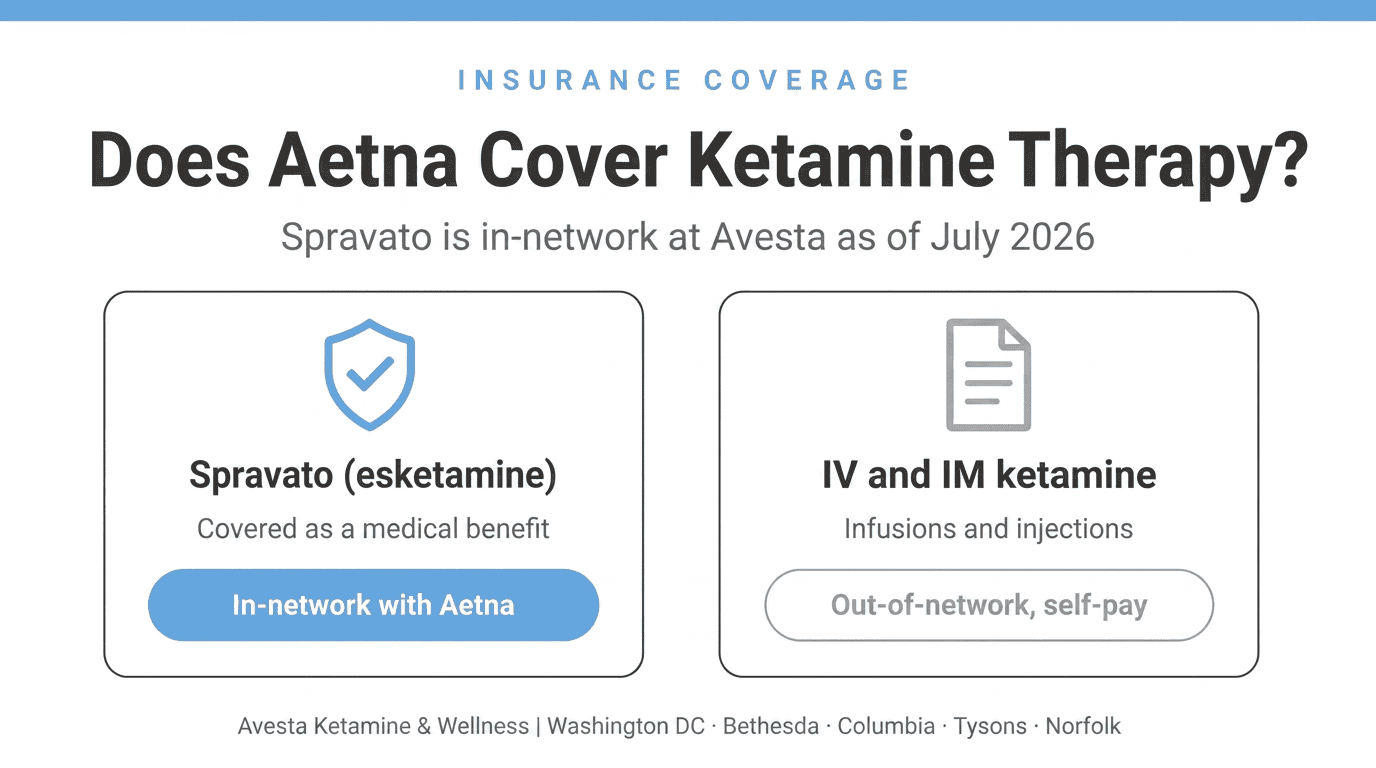
Spravato is FDA-approved for treatment-resistant depression and major depressive disorder with suicidality and is often partially or fully covered by insurance for people with these diagnoses. When insurance applies, out-of-pocket costs are limited to deductibles, copays, or coinsurance.
In this case, an HSA typically helps cover the remaining costs rather than the full treatment amount, so you generally need a smaller balance than with IV ketamine.
Bottom line: If you qualify medically, you can pay for IV ketamine and Spravato with HSA funds. The key difference is how much you need in your account—IV ketamine usually requires a higher balance, while Spravato often requires less due to insurance coverage for eligible diagnoses.
How to Pay for Ketamine Using an HSA (step by step)
Typically, you can pay for ketamine using an HSA either at checkout or through reimbursement. Both methods are valid if the expense is qualified.

Step 1: Choose how you want to pay
You have two valid options for using HSA funds, as long as the expense is qualified.
Option A: Pay at the clinic with your HSA card
You can often swipe your HSA debit card at checkout, just like a regular payment card. The cost is deducted from your HSA balance immediately, and no reimbursement is required later.
Option B: Pay out of pocket and reimburse yourself later
You can pay for ketamine treatment with a personal card and reimburse yourself from your HSA afterward. Many people choose this option because it keeps their HSA funds invested longer and creates a clear reimbursement record.
Step 2: Save your documentation
The IRS can review HSA spending years later, so recordkeeping is essential. For every ketamine expense, keep:
- An itemized receipt showing the services and cost
- The date of service and the provider name
- Proof of payment
- Documentation showing the treatment purpose or diagnosis, if available
- A reimbursement record if you paid yourself back from the HSA
Common Reasons HSA Ketamine Payments Get Rejected or Questioned
HSA payments for ketamine can fail because of documentation problems, as this Reddit post laments. Common reasons for rejection include:
- The receipt isn’t itemized
- Service looks like “wellness” rather than treatment
- Provider details are missing
- The expense can’t be tied to a diagnosed condition
Takeaway: The Safest Way to Use HSA Funds for Ketamine
The most straightforward way to use HSA funds for ketamine is to receive treatment in a clinical setting with clear documentation tied to a diagnosed condition. HSA eligibility is driven by Internal Revenue Service (IRS) rules and proper recordkeeping, not by whether your insurance covers the treatment.
For less clear situations, you can confirm details with your plan administrator or a tax professional—but for most patients, using HSA funds for clinically supervised ketamine therapy is uncomplicated and appropriate.
Avesta Ketamine and Wellness (Avesta) accepts HSA and FSA funds for ketamine treatment at its locations in Washington, DC, Bethesda, MD, Columbia, MD, and Tysons, VA. Schedule a free consultation and get clear answers about treatment options, costs, and how to use your benefits.

FAQs
Do I need my insurance company to approve ketamine for me to use my HSA?
No, you don’t need insurer approval to use HSA funds. You only need the expense to qualify under the IRS medical expense rules.
Can I use my HSA for Spravato copays and clinic monitoring visits?
Yes, you can use HSA money for Spravato-related out-of-pocket costs. Copays, deductibles, and required in-office monitoring visits are usually eligible.
If I swipe my HSA card, why do I need to provide receipts afterward?
Even if you swipe your HSA card, the IRS may still require proof that the expense was for a qualified medical purpose. Keeping itemized receipts protects you in case of a future audit.