How Much is Ketamine Therapy?

Last modified July 9, 2026

Image2

Written by Deborah Tan. Medically reviewed by Dr. Ladan Eshkevari, CRNA, PhD, FAAN. Last reviewed July 2026.

How Much Does Ketamine Therapy Cost in 2026?

As of July 2026, one clinical ketamine session costs about $275 to $1,700, depending on the treatment type, insurance coverage, facility, location, and staff experience. At-home prescription ketamine costs less per dose but does not include in-clinic medical monitoring. Insured Spravato patients often pay just $40 to $60 per visit, making it the least expensive supervised option for those with coverage.

Treatment typeTypical per-session cost (July 2026)Typical protocol total
IV ketamine infusion (in clinic)$400 – $1,000+$2,000 – $4,000 (4 to 6 infusions)
Spravato with insurance (in clinic)$40 – $60$480 – $720 (12 sessions)
Spravato without insurance (in clinic)$1,100 – $1,700$13,000 – $20,600 (12 sessions)
Generic ketamine nasal spray (at home)$100 – $200 per 30 ml bottleVaries by prescription
Oral tablets / troches (at home)$75 – $200 per prescriptionVaries by prescription
Intramuscular (IM) injection (in clinic)$275 – $400+$1,600 – $2,400 (4 to 6 sessions)
At-home telehealth program (e.g., Mindbloom)$165 – $215 per session$1,290 – $2,970 (6 to 18 sessions)

In this Post:

Ketamine therapy is a powerful treatment for several conditions[1], including mental health concerns, pain, and substance use disorders.

Unfortunately, ketamine therapy prices can be a significant hurdle. So, how much is ketamine therapy? As of July 2026, one clinical ketamine session ranges from about $275 to $1,700, depending on the treatment type, insurance coverage, facility, location, and staff experience. Prescription ketamine costs less than in-clinic treatments but comes with potential risks.

This article delves into the factors driving ketamine therapy cost, exploring insurance coverage, reimbursement options, and general pricing for infusions, tablets, and sprays.

Factors Influencing the Cost of Ketamine Therapy

ketamine types including IV, troches, nasal spray and IM

Several factors determine ketamine therapy cost. These elements vary significantly from one treatment center to another and may impact affordability and accessibility.

Type of treatment

There are four main methods of administering ketamine therapy:

  • Intravenously (IV)
  • Intramuscularly (IM)
  • Orally
  • Intranasally

Each route has different associated costs. For example, intravenous ketamine therapy, where patients are monitored in-clinic by healthcare professionals, is generally more expensive than at-home oral lozenges or intranasal sprays.

At-home treatments are more affordable. But, unsupervised ketamine therapy comes with potential dependence and overdose risks. Avesta strongly believes that in-clinic ketamine therapy supervised by experienced medical professionals is essential for patient safety and treatment effectiveness.

Ketamine Facility

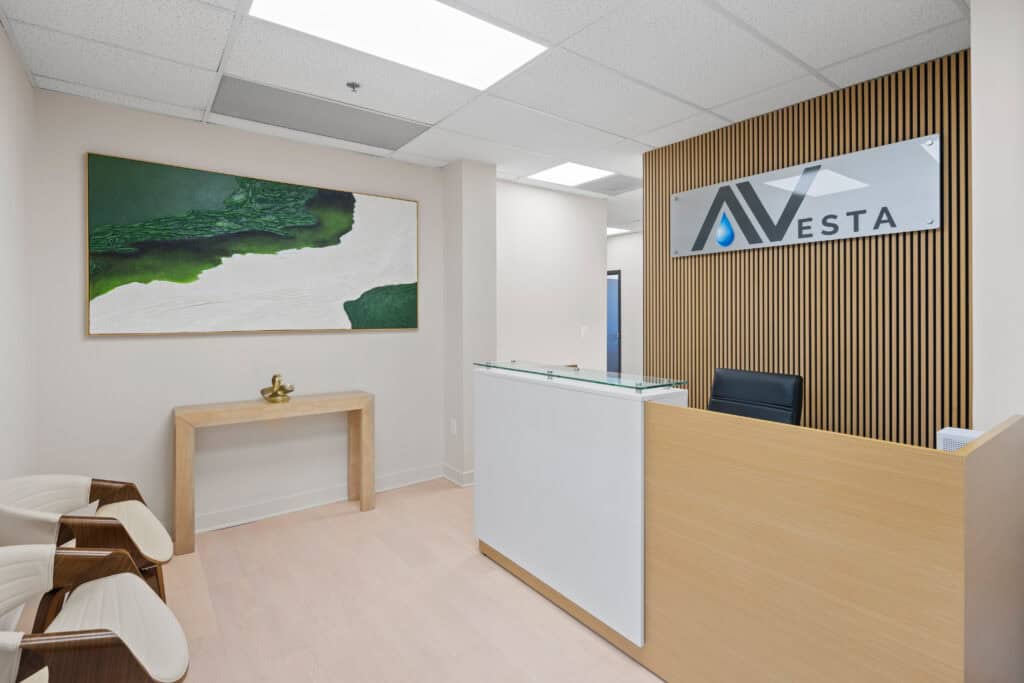
Avesta ketamine clinic lobby

The ketamine clinic location and the type of facility can also significantly influence treatment costs. Ketamine centers in major cities like Washington D.C. and New York typically charge higher prices than those in more remote areas due to higher overhead expenses like rent and staff salaries.

Additionally, private clinics often charge more for ketamine therapy than hospitals due to specialized staff, advanced equipment, and a more personalized approach.

Ancillary Services

Ketamine therapy costs generally exceed the medicine itself. That’s because protocols include ancillary services that patients must pay for. These services include psychotherapy sessions, consultations, counseling, and follow-ups.

Staff experience

Dr. Eshkevari at Avesta ketamine clinic

Ketamine clinics that employ independent licensed practitioners and trained medical assistants generally must charge more than centers with less specialized patient-care technicians.

Trained ketamine professionals have a deeper understanding of dosage, risks, safe handling of side effects, patient management, and protocols. This expertise warrants higher salaries and training costs, reflected in the overall treatment fees.

Comparing Ketamine Therapy Costs Across Treatment Types

Treatment type is a major factor influencing ketamine therapy cost.

ketamine therapy cost by treatment type

IV infusions

IV ketamine infusions are typically the most expensive treatment type out of pocket. Depending on the provider, one 40-60-minute IV ketamine session can start at around $400 and reach or exceed $1,000 (as of July 2026), depending on the city and level of care.

According to the American Society of Ketamine Physicians, Psychotherapists & Practitioners, $400 to $800 per ketamine treatment[2] is reasonable (guidance confirmed July 2026). Any more than that may be “asking too much.”

Most IV ketamine induction protocols consist of four to six treatments over two to three weeks, translating to an average of $2,000 to $4,000 total. Avesta strictly follows research protocols, consisting of at least six treatments over two to three weeks, before moving to a maintenance protocol.

Intranasal sprays

Intranasal spray costs range depending on whether the patient receives generic ketamine or esketamine, the S-enantiomer of ketamine. Price also depends on insurance coverage.

Spravato Costs (with and without insurance)

The FDA approved the esketamine intranasal spray[3], Spravato, in 2019, and approved it as a monotherapy for treatment-resistant depression in January 2025.

Medication Costs

Spravato patients must also pay monitoring fees, as they receive the medication in clinics under medical supervision, similar to IV sessions.

Monitoring Costs

  • Without insurance coverage, Spravato monitoring can cost $200 – $400 per visit (typical fees reported by U.S. Spravato providers, July 2026).
  • With insurance, eligible patients can pay as little as a standard co-pay (typically $30 – $50).

With medication and monitoring costs, uninsured Spravato treatments range from about $1,100 to as high as $1,700 per visit as of July 2026. Patients with coverage can pay $40 – $60 per treatment.

Spravato protocols require a twice-weekly dosage for four weeks, followed by a once-per-week session for another month. After eight weeks, patients generally taper down to every other week. Some patients discontinue treatment depending on their needs.

Total Spravato Protocol Costs

  • Uninsured Spravato patients could pay $13,000 – $20,600 out of pocket for the eight-week protocol, consisting of 12 sessions (recalculated from July 2026 per-session figures).
  • Insured Spravato patients could pay as little as $480 to $720 for the eight-week protocol.

Peer-reviewed cost-effectiveness research has examined whether esketamine’s benefits justify its list price. One U.S. analysis found esketamine unlikely to be cost-effective unless its price falls substantially[6], and a separate cost-utility study found electroconvulsive therapy delivered more quality-adjusted life years at a lower cost[7]. For insured patients, however, copay support programs can bring out-of-pocket costs down considerably.

Generic Ketamine Nasal Spray

Locally compounded ketamine intranasal sprays cost significantly less than Spravato, about $100–$200 per 30 ml bottle (as of July 2026).

Patients typically take generic ketamine sprays at home without medical supervision, which can lead to risks. The FDA recently issued a warning for compounded ketamine nasal sprays[8], citing adverse psychiatric events, misuse, and abuse stemming from a lack of standardization and safety measures. The FDA urged medical professionals to prescribe generic ketamine spray cautiously and report any adverse events.

Oral tablets

Ketamine oral tablets are the least expensive treatment because they are at-home medications.

Tablets, also called troches or lozenges, cost anywhere from $75 to $200 per prescription (as of July 2026), with the total amount depending on the number of tablets the patient needs. Like nasal sprays, ketamine tablets should be prescribed carefully and with a complete medical management picture in mind.

Intramuscular Injections

Intramuscular ketamine (IM) injections are not as popular as IV ketamine because of dosage control issues. However, some patients have reported they can be as effective and enjoy the strong “high” the IM injection can induce.

Each IM ketamine session generally costs $275 to $300 plus potential monitoring fees (as of July 2026). With a therapist or facilitator involved, each IM session typically costs $400+. It is crucial to choose a facilitator who can monitor patients with the safety equipment AND medical knowledge, and licensing to react in a crisis.

Most intramuscular patients receive the same number of injections as IV patients. Thus, a four-to-six IM ketamine protocol generally costs $1,600 to $2,400.

At-Home Ketamine Program Costs (In-Clinic vs. At-Home)

At-home ketamine treatments cost less per dose than monitored, in-clinic ketamine care because no medical team observes the session. As of July 2026, at-home options generally fall into three price tiers:

  • Compounded ketamine nasal sprays: about $100 – $200 per 30 ml bottle. These are the subject of the FDA compounded-spray safety warning above[8].
  • Oral tablets or troches: about $75 – $200 per prescription.
  • Telehealth ketamine programs: Mindbloom, one of the largest at-home providers, charges $165 to $215 per session for new clients[9], billed monthly, which comes to $1,290 to $2,970 for a program of 6 to 18 sessions (Mindbloom pricing, as of July 2026).

The lower price comes with a tradeoff: no on-site medical monitoring during the dissociative experience, no immediate clinical response if blood pressure rises or side effects escalate, and, for compounded products, none of the standardization the FDA flagged in its safety alert[8]. Patients weighing at-home programs against in-clinic care should compare the full protocol cost alongside the level of medical supervision included, and discuss any at-home option with a licensed clinician first.

Ketamine Infusions in Bethesda, MD, McLean, VA and Washington, DC

Insurance plans, including Medicaid and Medicare, typically exclude ketamine treatment from coverage. That’s because the FDA has not approved ketamine specifically for mental health or chronic pain, only as an anesthetic. Clinicians must administer ketamine off-label because of this issue.

Spravato is the exception. Some insurance plans cover this esketamine nasal spray because it is FDA-approved. However, patients must request pre-authorization and receive specific diagnoses to qualify for coverage.

In some instances, patients receiving IV ketamine infusions may also receive partial or complete insurance coverage. For example, insurers sometimes cover ancillary ketamine therapy costs, such as consultation and screening appointments. Patients must communicate with their insurance provider to determine options before beginning treatment.

Avesta has been working to expand access to ketamine therapy treatments and is proud to be in-network with the VA (Veterans Affairs). Veterans with coverage should contact their VA offices and request an Avesta referral for IV ketamine and Spravato treatments.

Avesta has also received Workman’s Compensation Coverage approval and will soon be in-network with select payers.

For a step-by-step breakdown of ways to lower your treatment bill, see our guide on how to pay for ketamine therapy and reduce out-of-pocket costs.

Tips for Discussing Ketamine Treatment Coverage With Insurance Providers

Avesta patient receiving IV ketamine therapy

Before scheduling ketamine treatment:

  • Patients should call their insurer to request ketamine coverage information. Upon first contact, patients should ask for a reference number and the representative’s name to streamline communication and track inquiries.
  • Patients should confirm if their plan covers ketamine treatment and, if so, to what extent. Asking about specific inclusions such as infusions and consultations can help avoid unexpected bills.
  • Since most ketamine clinics fall outside the coverage network, patients should also check for out-of-network options. This can help determine all out-of-pocket expenses.

For patients with partial coverage:

Patients can determine partial coverage options by sending ketamine billing codes to their insurer before treatment. Common codes include:

  • 96365: This code covers the actual IV infusion.
  • 99214: This code covers the doctor’s consultation and assessment.

Financial Assistance and Support Options

HSA/FSA Accounts: Health Savings and Flexible Spending Accounts (HSA/FSA) are pre-tax accounts patients can use to fund ketamine therapy. Patients must be enrolled in a high-deductible health plan (HDHP) to be eligible for them. Avesta accepts both Health HSA and FSA as payment options for ketamine therapy.

Paying in installments: Patients can also pay for ketamine therapy in installments to reduce upfront costs. Ketamine clinics sometimes offer payment plans and work closely to ensure all patients can access the healing therapy they need.

Medical credit: Another way to finance ketamine therapy is through credit. Avesta partners with Advance Care Card to offer patients this option with competitive interest rates.

Special provisions for military veterans: Some facilities offer discounted ketamine therapy rates for current and retired military personnel who meet specific eligibility criteria. Avesta partners with Ten Ten Life, a 501(c)(3) nonprofit, to provide trauma-informed counseling and professional coaching services to military members and veterans, as well as Operation Task Force Dagger, a 501(c)(3) dedicated to assisting Special Operations Command members and their families.

FAQs About Ketamine Therapy Cost

Does insurance cover ketamine infusions?

Generally, insurance does not cover ketamine infusions. However, in some cases, insurance companies might partially reimburse patients who’ve demonstrated that ketamine therapy is necessary after traditional treatments have failed.

How much is ketamine therapy near me?

Ketamine therapy prices vary depending on the region, but cities are generally more expensive than rural areas. As of July 2026, IV ketamine sessions start at $400 each. Lozenges start at $75. Generic nasal sprays start at $100, and uninsured Spravato begins at about $1,100 with monitoring fees.

Are there additional costs associated with ketamine therapy apart from the treatment itself?

Yes, additional costs associated with ketamine therapy may include initial consultation fees, monitoring, maintenance or follow-up treatment sessions, and supplementary therapies or medications. There are also non-monetary costs, such as time off work for treatment.

Are there low-cost or financing options available for ketamine therapy?

Yes, there are low-cost or financing options available for ketamine therapy. These options vary depending on the clinic, with some offering sliding scale fees, payment plans, or assistance programs.

How much does at-home ketamine therapy cost?

As of July 2026, at-home ketamine treatment generally costs $75 to $430 per month depending on the format. Oral tablets run about $75 to $200 per prescription, compounded nasal sprays about $100 to $200 per bottle, and telehealth programs such as Mindbloom bill $330 to $430 per month, or $165 to $215 per session[9]. These prices do not include in-clinic medical monitoring, and the FDA has warned about safety risks associated with compounded at-home ketamine products[8].

Why do ketamine prices vary so much between clinics?

Ketamine prices vary between clinics because of differences in treatment type, facility location and overhead, staff credentials and experience, and the ancillary services included, such as consultations, psychotherapy, and follow-ups. Clinics in major cities generally charge more than those in smaller markets. As a benchmark, the American Society of Ketamine Physicians, Psychotherapists & Practitioners considers $400 to $800 per infusion reasonable[2].

Patients should contact Avesta’s VirginiaMaryland, and Washington D.C. clinics to learn about its ketamine price as well as insurance and other financing options.

IV Ketamine infusions for depression anxiety ptsd chronic pain fibromyalgia CRPS Bethesda MD McLean VA Washington DC

References

  1. Walsh, Z., Mollaahmetoglu, O. M., Rootman, J., et al. “Ketamine for the treatment of mental health and substance use disorders: comprehensive systematic review.” BJPsych Open, 2022. Accessed July 9, 2026.
  2. American Society of Ketamine Physicians, Psychotherapists & Practitioners. “How to Choose a Ketamine Clinic.” ASKP3. Accessed July 9, 2026.
  3. U.S. Food and Drug Administration. “SPRAVATO (esketamine) nasal spray: Highlights of Prescribing Information.” FDA, revised 2025. Accessed July 9, 2026.
  4. Drugs.com. “Spravato Prices, Coupons and Patient Assistance Programs.” Drugs.com Price Guide. Accessed July 9, 2026.
  5. Johnson & Johnson. “SPRAVATO withMe Savings Program: Commercial or Private Insurance.” J&J withMe. Accessed July 9, 2026.
  6. Ross, E. L., & Soeteman, D. I. “Cost-Effectiveness of Esketamine Nasal Spray for Patients With Treatment-Resistant Depression in the United States.” Psychiatric Services, 2020. Accessed July 9, 2026.
  7. Norström, F., et al. “Cost-utility analysis of esketamine and electroconvulsive therapy in adults with treatment-resistant depression.” BMC Psychiatry, 2021. Accessed July 9, 2026.
  8. U.S. Food and Drug Administration. “FDA Alerts Health Care Professionals of Potential Risks Associated with Compounded Ketamine Nasal Spray.” FDA, 2023. Accessed July 9, 2026.
  9. Mindbloom. “How much do Mindbloom programs cost?” Mindbloom Help Center, updated April 2026. Accessed July 9, 2026.

About the reviewer: Dr. Ladan Eshkevari, CRNA, PhD, FAAN is the founder and co-CEO of Avesta Ketamine and Wellness. She is a certified registered nurse anesthetist, professor emeritus at Georgetown University, and a Fellow of the American Academy of Nursing. Dr. Eshkevari has led Avesta’s monitored, in-clinic ketamine care protocols since 2018.

Deborah is co-CEO of Avesta Ketamine and Wellness. She is dedicated to improving the patient experience and to expanding access for cutting-edge mental health treatments for patients suffering from treatment-resistant depression, generalized anxiety, PTSD and other mood disorders.

Start Your Wellness Journey

Take the first step to healing. Speak with one of our experienced intake coordinators to: